Stability Ball
| Verantwoordelijke | Inge |
|---|---|
| Laatst bijgewerkt | 19-12-2025 |
| Doorlooptijd | 3 minuten |
| Leden | 1 |
Side Plank on Yoga Ball
Purpose:
build lateral core strength and balance.
Starting Position:
Side plank position with the forearm or side of the body supported on the yoga ball.
Feet stacked or staggered for balance.
Execution:
Lift the hips into a side plank position.
Hold the body in a straight line.
Breathe calmly and maintain control.
Common Mistakes:
Hips sagging
Over-tension in the neck
Unstable shoulder position
Coaching Tip:
push actively into the ball to stay stable.
Purpose:
activate the posterior chain and improve spinal control.
Starting Position:
Lie on your back with the yoga ball between the legs and arms.
Execution:
Lift one arms and one legs slightly off the ball.
Hold the position briefly with control.
Lower back down slowly.
Common Mistakes:
Overarching the lower back
Lifting the head excessively
Coaching Tip:
focus on length through the body, not height.
Purpose:
strengthen the lower back, glutes, and postural muscles.
Starting Position:
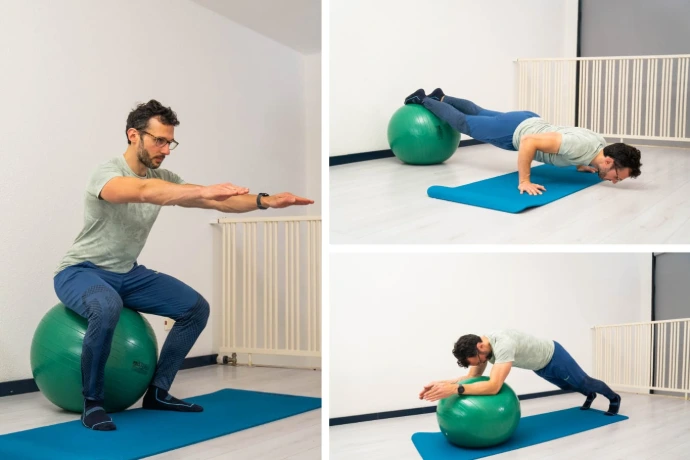
Lie face down over the yoga ball.
Feet on the floor, hands lightly supporting balance or extended forward.
Execution:
Lift the chest slightly while keeping the neck neutral.
Hold the position briefly.
Lower with control and repeat.
Common Mistakes:
Overextending the lower back
Lifting the head excessively
Coaching Tip:
think “long spine” rather than “high lift.”
Purpose:
stretch hips, thighs, and improve lower-body mobility.
Starting Position:
Kneel on the floor with one knee down and the other foot forward.
Yoga ball used lightly for balance or support.
Execution:
Shift the hips gently forward.
Keep the torso upright.
Hold the stretch, then switch sides.
Common Mistakes:
Arching the lower back
Leaning forward excessively
Coaching Tip:
slightly tuck the pelvis to deepen the stretch safely.
Purpose:
stretch the chest and shoulders while activating postural muscles.
Starting Position:
Lie over the yoga ball with feet firmly on the floor.
Arms extended out to the sides, head relaxed.
Execution:
Open the arms wide to stretch the chest.
Bring the arms back together while gently lifting the head and upper chest.
Lower back into the stretch and repeat.
Common Mistakes:
Pulling the head forward aggressively
Shrugging the shoulders
Coaching Tip:
keep the neck long and movements smooth.
Purpose:
relieve tension in the lower back and gently mobilise the spine.
Starting Position:
Sit in front of the yoga ball and slowly lie back so the lower back rests on the ball.
Feet flat on the floor for support.
Arms relaxed.
Execution:
Allow the pelvis and lower back to relax over the ball.
Breathe deeply while holding the position.
Small side-to-side movements may be added if comfortable.
Common Mistakes:
Forcing spinal extension
Tensing the neck or shoulders
Coaching Tip:
this is a relaxation stretch—let gravity do the work.
Purpose:
stretch the hip flexors and front of the thigh.
Starting Position:
Kneel in a lunge position.
Rear foot placed on the yoga ball behind you.
Front foot flat on the floor.
Execution:
Gently shift the hips forward.
Keep the torso upright and core engaged.
Hold the stretch, then switch sides.
Common Mistakes:
Arching the lower back
Losing balance
Coaching Tip:
slightly tuck the pelvis to deepen the hip flexor stretch safely.
Purpose:
stretch the hamstrings and calves.
Starting Position:
One leg extended on the yoga ball, the other leg bent with foot on the floor.
Execution:
Gently extend the leg on the ball.
Pull toes slightly toward you to deepen the stretch.
Hold briefly, then switch legs.
Common Mistakes:
Locking the knee
Lifting the hips unnecessarily
Coaching Tip:
keep the stretch comfortable, not painful.
Purpose:
improve thoracic spine mobility and chest opening.
Starting Position:
Sit with the yoga ball between your legs.
Hold the bal in front of you with your hands..
Execution:
Open one arm sideways and backwards.
Return to the starting position and repeat.
Common Mistakes:
Forcing the rotation
Moving the hips instead of the upper back
Coaching Tip:
rotation should come from the upper back, not the lower spine.
Purpose:
open the chest and stretch the spine into gentle extension.
Starting Position:
Sit in front of the yoga ball and lean back until the ball supports the spine.
Feet planted firmly on the floor.
Execution:
Allow the upper body to drape over the ball.
Relax the arms and neck.
Hold the stretch while breathing deeply.
Common Mistakes:
Holding tension in the neck
Arching forcefully instead of relaxing
Coaching Tip:
let gravity do the work—this is a relaxation stretch.
Purpose:
mobilise the spine and gently stretch the back muscles.
Starting Position:
Sit in front of the yoga ball and carefully lie back over it.
Feet flat on the floor for stability.
Arms relaxed to the sides or behind the head.
Execution:
Gently shift the upper body from left to right over the ball.
Let the spine move smoothly across the surface of the ball.
Breathe calmly throughout the movement.
Common Mistakes:
Moving too fast
Tensing the neck or shoulders
Forcing the range of motion
Coaching Tip:
use the ball to massage and mobilise, not to push into discomfort.
Purpose:
stretch the spine and open the chest.
Starting Position:
Sit in front of the yoga ball.
Carefully lean back over the ball.
Execution:
Allow the spine to extend gently over the ball.
Hold the stretch while breathing calmly.
Common Mistakes:
Forcing the stretch
Neck tension
Coaching Tip:
relax into the ball and let gravity do the work.
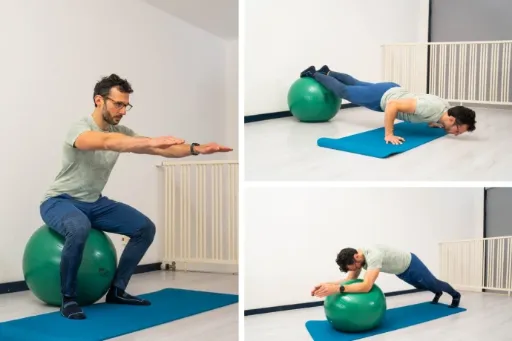
Purpose:
improve leg strength and controlled sit-to-stand movement.
Starting Position:
Sit on the yoga ball with feet flat on the floor.
Spine tall, core engaged.
Execution:
Stand up from the ball.
Slowly sit back down with control.
Common Mistakes:
Dropping too fast
Knees moving inward
Losing posture
Coaching Tip:
control the descent more than the rise.