Overslaan naar inhoud
Verantwoordelijke Inge
Laatst bijgewerkt 19-12-2025
Doorlooptijd 3 minuten
Leden 1
Stability Ball

Side Plank on Yoga Ball

Purpose:

build lateral core strength and balance.

Starting Position:

  • Side plank position with the forearm or side of the body supported on the yoga ball.

  • Feet stacked or staggered for balance.

Execution:

  1. Lift the hips into a side plank position.

  2. Hold the body in a straight line.

  3. Breathe calmly and maintain control.

Common Mistakes:

  • Hips sagging

  • Over-tension in the neck

  • Unstable shoulder position

Coaching Tip:

push actively into the ball to stay stable.

Stability Ball
Knee-to-Ball Pull-In (Straight Arms)

Purpose:

strengthen core and hip flexors while maintaining shoulder stability.

Starting Position:

  • High plank position with hands on the ball.

Execution:

  1. Pull one or both knees toward the ball.

  2. Extend the legs back to plank.

Common Mistakes:

  • Hips lifting too high

  • Collapsing shoulders

Coaching Tip:

push the floor away with your hands.

Stability Ball
Straight-Leg Hip Bridge with Feet on Yoga Ball

Purpose:

strengthen glutes, hamstrings, and posterior chain.

Starting Position:

  • Lie on your back with straight legs resting on the yoga ball.

  • Arms by your sides.

Execution:

  1. Press heels into the ball.

  2. Lift hips upward into a straight line.

  3. Lower hips with control.

Common Mistakes:

  • Bending the knees

  • Overarching the lower back

Coaching Tip:

squeeze the glutes at the top of the lift.

Stability Ball
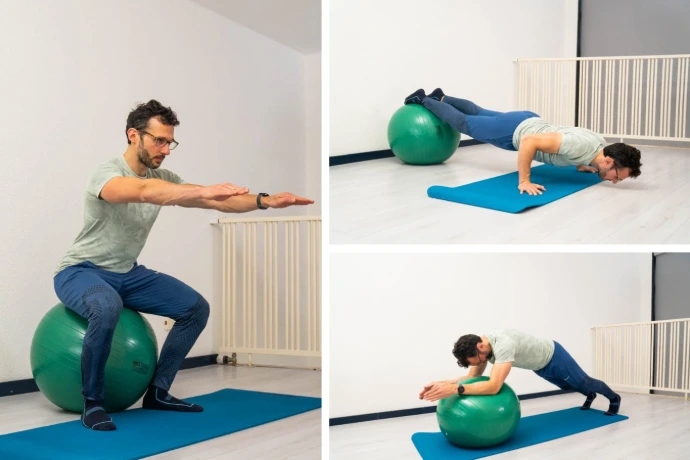
Forearm Plank on Yoga Ball with Alternating Leg Lift

Purpose:

improve core stability, glute activation, and balance.

Starting Position:

  • Place both forearms on the yoga ball.

  • Knees or toes on the floor, body in a straight line.

Execution:

  1. Lift one leg slightly off the floor.

  2. Place it back down with control.

  3. Alternate legs while keeping the torso stable.

Common Mistakes:

  • Hips swaying side to side

  • Losing pressure on the ball

Coaching Tip:

imagine balancing a glass of water on your back.

Stability Ball
Wall-Supported Stability Ball Crunch

Purpose:

train the abs with added external support.

Starting Position:

  • Yoga ball between the back and the wall.

  • Feet forward, stable stance.

Execution:

  1. Perform a controlled crunch against the ball.

  2. Return to neutral position.

Common Mistakes:

  • Using the legs to push

  • Excessive range

Coaching Tip:

keep the movement small and controlled.

Stability Ball
Stability Ball Crunch – Tempo Variation

Purpose:

increase abdominal endurance.

Starting Position:

  • Same setup as standard ball crunch.

Execution:

  1. Crunch up slowly.

  2. Pause briefly.

  3. Lower slowly.

Common Mistakes:

  • Rushing repetitions

  • Losing balance

Coaching Tip:

slow tempo = better control.

Stability Ball
Stability Ball Crunch

Purpose:

strengthen the abdominal muscles through controlled spinal flexion.

Starting Position:

  • Sit on the yoga ball and walk feet forward.

  • Lower back supported by the ball.

Execution:

  1. Lift the upper body into a small crunch.

  2. Lower back over the ball.

Common Mistakes:

  • Pulling the neck

  • Crunching too high

Coaching Tip:

focus on ribs moving toward the pelvis.

Stability Ball
Sit-ups on Yoga Ball

Purpose:

improve core stability and balance.

Starting Position:

  • Lie with your back on the yoga ball.

  • Feet on the floor, hands lightly supporting balance.

Execution:

  1. Maintain balance on the ball.

  2. Move your torso upwards.

Common Mistakes:

  • Over-tensing the lower back

  • Letting the ball roll away

Coaching Tip:

think squeeze

Stability Ball
Wall-Supported Leg Press with Yoga Ball

Purpose:

strengthen posterior chain with added stability.

Starting Position:

  • Lie on your back.

  • Yoga ball between feet and wall.

  • Legs bent.

Execution:

  1. Press the ball into the wall.

  2.  Extend your legs.

  3. Lower with control.

Common Mistakes:

  • Losing pressure on the ball

  • Holding breath

Coaching Tip:

keep constant pressure on the ball during the lift.

Stability Ball
Supine Hip Extension with Feet Against Yoga Ball

Purpose:

activate glutes and hamstrings.

Starting Position:

  • Lie on your back facing a wall.

  • Feet pressing into the yoga ball against the wall.

  • Knees bent.

Execution:

  1. Push feet into the ball.

  2. Lift the hips upward into a bridge.

  3. Lower the hips back down.

Common Mistakes:

  • Overarching the lower back

  • Uneven hip lift

Coaching Tip:

drive the movement from the glutes, not the lower back.

Stability Ball
Supine Open-and-Close Legs

Purpose:

mobilise the hips and lightly activate the lower back.

Starting Position:

  • Lie with your stomach on the ball.

  • Legs lifted.

Execution:

  1. Open the legs outward.

  2. Bring them back together.

  3. Movement stays controlled and symmetrical.

Common Mistakes:

  • Letting legs drop too low

  • Moving too fast

Coaching Tip:

keep tension in the legs, not in the neck or shoulders.

Stability Ball
Seated Straddle Stretch with Forward–Backward Ball Roll

Purpose:

stretch the inner thighs and improve hip mobility.

Starting Position:

  • Sit upright with legs open (straddle).

  • Yoga ball placed in front of the body.

Execution:

  1. Roll the ball forward while hinging at the hips.

  2. Roll the ball back to upright position.

  3. Keep the spine long.

Common Mistakes:

  • Rounding the back

  • Forcing the stretch

Coaching Tip:

move only as far as you can while keeping a neutral spine.

Stability Ball
Ball hold against the wall/Leg Circles

Purpose:

core stability, hip flexor control, leg control, coordination, and shoulder endurance.

Starting Position:

  • Sit in a V-sit facing away from the wall.

  • Press the yoga ball against the wall overhead with straight arms.

  • Keep both legs extended.(core engaged).

Execution:

  1. Hold the ball steady against the wall.

  2. Make circle movements with your legs

  3. Keep the legs extended and controlled

  4. Keep the torso as still as possible while the legs alternate.

Common Mistakes:

  • Rocking the pelvis side to side

  • Letting the ball drift or losing pressure

  • Neck tension / shoulders shrugging

  • Moving too fast and losing form

Coaching Tip:

exhale on leg circle to keep the deep core active.