Overslaan naar inhoud
Verantwoordelijke Inge
Laatst bijgewerkt 19-12-2025
Doorlooptijd 3 minuten
Leden 1
Stability Ball

Side Plank on Yoga Ball

Purpose:

build lateral core strength and balance.

Starting Position:

  • Side plank position with the forearm or side of the body supported on the yoga ball.

  • Feet stacked or staggered for balance.

Execution:

  1. Lift the hips into a side plank position.

  2. Hold the body in a straight line.

  3. Breathe calmly and maintain control.

Common Mistakes:

  • Hips sagging

  • Over-tension in the neck

  • Unstable shoulder position

Coaching Tip:

push actively into the ball to stay stable.

Stability Ball
Leg Lifts

Purpose:

strengthen the lower back and improve leg control.

Starting Position:

  • Lie with your stomach on the ball.

  • Yoga ball placed near the legs (used as reference/support, not held).

  • Legs extended, arms by your sides.

Execution:

  1. Lift both legs upward together in a controlled motion.

  2. Lower the legs back down without touching the floor.

  3. Keep the pelvis stable and the lower back controlled.

Common Mistakes:

  • Swinging the legs

  • Using momentum instead of control

Coaching Tip:

stop lowering the legs the moment the lower back starts to lift.

Stability Ball
Alternating Straight-Leg Press Against Wall with Ball

Purpose:

strengthen hip flexors, core stability, and coordination.

Starting Position:

  • Lie on your back facing a wall.

  • Place the yoga ball between your feet and the wall.

  • Legs extended.

Execution:

  1. Press the ball into the wall with one leg.

  2. Switch legs while keeping the ball in place.

  3. Alternate slowly with control.

Common Mistakes:

  • Letting the ball drop

  • Pelvic movement

  • Fast, uncontrolled switches

Coaching Tip:

keep steady pressure on the ball at all times.

Stability Ball
Stability Ball Knee Tuck (Jackknife)

Purpose:

develop core strength (especially lower abs), shoulder stability, and hip control.

Starting Position:

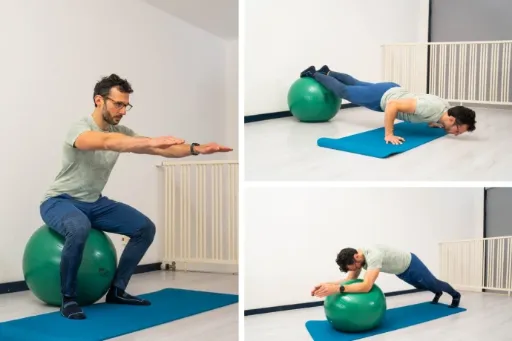
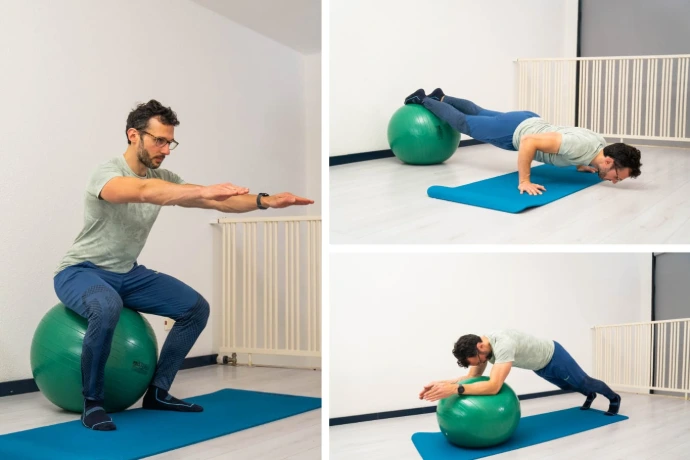
  • Start in a high plank with shins/feet on the yoga/stability ball.

  • Hands under shoulders, body in a straight line.

Execution:

  1. Brace the core and pull both knees toward the chest, rolling the ball forward.

  2. Keep shoulders stable and hips controlled.

  3. Extend the legs back to plank slowly.

Common Mistakes:

  • Hips sagging or piking too high

  • Shoulders collapsing (hands too far forward)

  • Rolling too fast and losing control

Coaching Tip:

move slowly—control on the way back to plank is where most of the core work happens.

Stability Ball
Pelvic Tilts on Stability Ball

urpose:

improve pelvic control and activate deep core muscles.

Starting Position:

  • Sit on the yoga ball with feet flat on the floor.

  • Hands on hips, spine neutral.

Execution:

  1. Gently tilt the pelvis forward.

  2. Then tilt it backward.

  3. Move slowly through the range.

Common Mistakes:

  • Moving too fast

  • Using upper body instead of pelvis

  • Holding breath

Coaching Tip:

think of rolling the pelvis, not the shoulders.

Stability Ball
Hip-Elevated Controlled Leg Extension (Yoga Ball)

Purpose:

strengthen the posterior chain (glutes and hamstrings), improve pelvic control, and activate the deep core.

Starting Position:

  • Lie on your back with both heels placed on the yoga/stability ball.

  • Arms by your sides, palms pressing lightly into the floor.

  • Lift the hips so the body forms a straight line from shoulders to heels.

Execution:

  1. Maintain the elevated hip (bridge) position.

  2. Slowly extend the legs by rolling the ball away from the body.

  3. Keep the hips lifted and level throughout the movement.

  4. Pull the ball back toward you with control to return to the start position.

Common Mistakes:

  • Letting the hips drop during the leg extension

  • Arching the lower back

  • Moving the ball too far and losing control

Coaching Tip:

only extend the legs as far as you can without losing hip height—quality over range.
Stability Ball
Lateral Ball Taps

Purpose:

improve coordination, core activation, and balance.

Starting Position:

  • Sit with the yoga ball positioned under your knees.

  • Core engaged.

Execution:

  1. Tap the ball lightly to one side.

  2. Return to center and tap to the other side.

  3. Maintain rhythm and control.

Common Mistakes:

  • Excessive upper-body movement

  • Rushing the taps

  • Losing posture

Coaching Tip:

stay light and precise with each tap.

Stability Ball
Behind-the-Back Ball Hold (Shoulder Opener / Posture Drill)

Purpose:

open the chest, improve shoulder extension mobility, support upright posture.

Starting Position:

  • Sit on your knees.

  • Hold the yoga/stability ball behind your back with both hands.

  • Shoulders down and back, ribs stacked over the pelvis.

Execution:

  1. Move your torso forward while keeping arms straight (not locked).

  2. Keep the neck relaxed.

  3. Hold 10–30 seconds or perform small controlled pulses.

Common Mistakes:

  • Arching the lower back to “fake” more range

  • Shrugging the shoulders

  • Forcing the stretch into pain

Coaching Tip:

think “long spine + open chest”—small range done well is more effective than forcing it.

Stability Ball
Wall-to-Head Ball Transfer

Purpose:

improve coordination, core strength, and shoulder control.

Starting Position:

  • Sit in a V-sit facing the wall.

  • Hold the yoga ball against the wall overhead with both hands.

  • Legs lifted, core engaged.

Execution:

  1. Pull the ball away from the wall toward your head.

  2. Extend it back toward the wall with control.

  3. Maintain torso stability.

Common Mistakes:

  • Dropping the legs

  • Rounding the back

  • Using momentum

Coaching Tip:

keep the movement slow and controlled.

Stability Ball
Ball Squeeze (Adductor Press)

Purpose:

activate inner thighs (adductors), improve pelvic stability, support deep core engagement.

Starting Position:

  • Stand up with knees bent and feet flat on the floor.

  • Place the yoga/stability ball between your knees (or inner thighs).

  • Arms relaxed by your sides, core gently engaged.

Execution:

  1. Squeeze the ball by pressing the knees inward.

  2. Hold the squeeze briefly (1–3 seconds).

  3. Release slightly without losing control, then repeat.

Common Mistakes:

  • Holding your breath

  • Pressing so hard that the pelvis tilts or the lower back arches

  • Letting the knees drift outward between reps

Coaching Tip:

exhale during the squeeze to activate the deep core more effectively.

Stability Ball
Ball Between Legs – Side-to-Side Movement

Purpose:

activate obliques and improve rotational control.

Starting Position:

  • Lie on your back holding the yoga ball between your legs.

  • Legs lifted, arms by your sides.

Execution:

  1. Move both legs together from left to right.

  2. Control the movement through the core.

  3. Keep shoulders relaxed on the floor.

Common Mistakes:

  • Letting shoulders lift

  • Moving too fast

  • Losing tension on the ball

Coaching Tip:

imagine your legs moving as one unit.

Stability Ball
Ball Between Legs – Circular Movement

Purpose:

strengthen the core, hip flexors, and improve coordination.

Starting Position:

  • Sit or lie on your back with the yoga ball held firmly between the legs.

  • Legs lifted, core engaged, spine long.

Execution:

  1. Keep constant pressure on the ball with both legs.

  2. Move the legs in small controlled circles.

  3. Maintain a stable torso throughout.

Common Mistakes:

  • Large uncontrolled circles

  • Losing grip on the ball

  • Pelvic movement

Coaching Tip:

smaller circles create more core control.

Stability Ball
Ball Between Feet – Forward and Backwards Movement

Purpose:

strengthen hip flexors, lower abdominals, and coordination.

Starting Position:

  • Lie on your back holding the yoga ball between both feet.

  • Legs extended.

Execution:

  1. Move the ball forward away from the body.

  2. Pull it back toward the torso with control.

  3. Keep legs engaged throughout.

Common Mistakes:

  • Bending knees

  • Losing grip on the ball

  • Arching the lower back

Coaching Tip:

maintain constant pressure on the ball with both feet.