Overslaan naar inhoud
Verantwoordelijke Inge
Laatst bijgewerkt 19-12-2025
Doorlooptijd 3 minuten
Leden 1
Stability Ball

Side Plank on Yoga Ball

Purpose:

build lateral core strength and balance.

Starting Position:

  • Side plank position with the forearm or side of the body supported on the yoga ball.

  • Feet stacked or staggered for balance.

Execution:

  1. Lift the hips into a side plank position.

  2. Hold the body in a straight line.

  3. Breathe calmly and maintain control.

Common Mistakes:

  • Hips sagging

  • Over-tension in the neck

  • Unstable shoulder position

Coaching Tip:

push actively into the ball to stay stable.

Stability Ball
Single-Leg Wall Ball Hold

Purpose:

build static leg strength and core stability.

Starting Position:

  • Lie on your back with one foot pressing the ball against the wall.

  • Other leg lifted or bent.

Execution:

  1. Hold constant pressure on the ball with one foot.

  2. Maintain stable hips and steady breathing.

  3. Extend the lifted/bent leg controlled.

Common Mistakes:

  • Ball slipping

  • Holding breath

  • Pelvic tilt

Coaching Tip:

keep tension even and controlled.

Stability Ball
Wall Ball Press with Single-Leg Circles

Purpose:

improve hip mobility and unilateral stability.

Starting Position:

  • Lie on your back with one foot pressing the ball against the wall.

  • Other leg lifted.

Execution:

  1. Draw small circles with the lifted leg.

  2. Keep the pressing leg stable.

  3. Switch directions and sides.

Common Mistakes:

  • Large uncontrolled circles

  • Pelvic movement

  • Ball instability

Coaching Tip:

smaller circles create better control.

Stability Ball
Wall Ball Bridge

Purpose:

strengthen glutes, hamstrings, and core stability.

Starting Position:

  • Lie on your back with feet on the yoga ball against the wall.

  • Arms by your sides.

Execution:

  1. Press feet into the ball and lift the hips upward.

  2. Form a straight line from shoulders to knees.

  3. Lower the hips slowly.

Common Mistakes:

  • Overarching the lower back

  • Ball slipping

  • Uneven hip lift

Coaching Tip:

squeeze the glutes at the top of the movement.

Stability Ball
Wall Ball Overhead Hold in V-Sit with Alternating Knee Drives (Marching)

Purpose:

core stability, hip flexor control, coordination, and shoulder endurance.

Starting Position:

  • Sit in a V-sit facing the wall.

  • Press the yoga ball against the wall overhead with straight arms.

  • Keep one leg extended and the other ready to lift (core engaged).

Execution:

  1. Hold the ball steady against the wall.

  2. Bring one knee toward the chest (controlled).

  3. Lower it and switch sides (alternating “marching”).

  4. Keep the torso as still as possible while the legs alternate.

Common Mistakes:

  • Rocking the pelvis side to side

  • Letting the ball drift or losing pressure

  • Neck tension / shoulders shrugging

  • Moving too fast and losing form

Coaching Tip:

exhale on each knee drive to keep the deep core active.

Stability Ball
Wall Ball Press with One Leg Bent Behind the Knee

Purpose:

improve unilateral leg control and core stability.

Starting Position:

  • Lie on your back facing the wall.

  • One foot presses the ball against the wall.

  • The opposite leg is bent with the foot behind the knee of the working leg.

Execution:

  1. Press the ball into the wall using the working leg.

  2. Keep hips stable.

  3. Hold or perform small pulses.

Common Mistakes:

  • Pelvis shifting

  • Losing ball contact

  • Over-tension in the neck

Coaching Tip:

focus on steady pressure rather than force.

Stability Ball
Wall Ball Overhead Hold in V-Sit with Alternating Straight-Leg Lifts

Purpose:

deep core activation, hip flexor strength, shoulder stability, and full-body control.

Starting Position:

  • Sit facing the wall and lean back into a V-sit/teaser hold.

  • Press the yoga ball against the wall with both hands, arms straight (not locked).

  • Keep the chest lifted, core braced, legs extended.

Execution:

  1. Maintain steady pressure on the ball against the wall.

  2. Lift one straight leg upward (controlled).

  3. Lower it back down without collapsing the torso.

  4. Alternate legs in a slow, controlled rhythm.

Common Mistakes:

  • Dropping the chest or rounding the back

  • Arching the lower back / ribs flaring

  • Shoulders shrugging toward the ears

  • Swinging the legs (using momentum)

Coaching Tip:

keep the leg lift small if needed—torso stability comes first.

Stability Ball
Ball Toss Against the Feet

Purpose:

improve coordination, core activation, and reaction speed.

Starting Position:

  • Lie on your back with legs lifted and knees slightly bent.

  • Hold the yoga ball in your hands.

Execution:

  1. Toss the ball gently toward your feet.

  2. Catch or stop the ball using your feet.

  3. Return the ball to the hands and repeat.

Common Mistakes:

  • Throwing the ball too hard

  • Losing core tension

  • Dropping the ball

Coaching Tip:

keep movements light and controlled.

Stability Ball
Wall Ball Overhead Roll in V-Sit

Purpose:

strengthen deep core muscles, improve shoulder stability, and enhance total-body control.

Starting Position:

  • Sit facing the wall.

  • Lean back into a V-sit/teaser position (upper body lifted, legs lifted).

  • Hold the yoga ball with both hands and place it against the wall above/just in front of your head.

  • Keep the spine long and the core engaged.

Execution:

  1. Maintain the V-sit position with legs elevated and steady.

  2. Press the ball lightly into the wall with straight (but not locked) arms.

  3. Slowly roll the ball a small distance up the wall.

  4. Roll it back down with control.

  5. Keep the torso stable and continue breathing throughout.

Common Mistakes:

  • Dropping the legs or collapsing the chest

  • Arching the lower back / ribs flaring upward

  • Rolling the ball too far (losing control)

  • Tensing the neck or shrugging the shoulders

Coaching Tip:

keep the roll small and slow—the goal is stability (still legs + steady core), not a big range of motion.
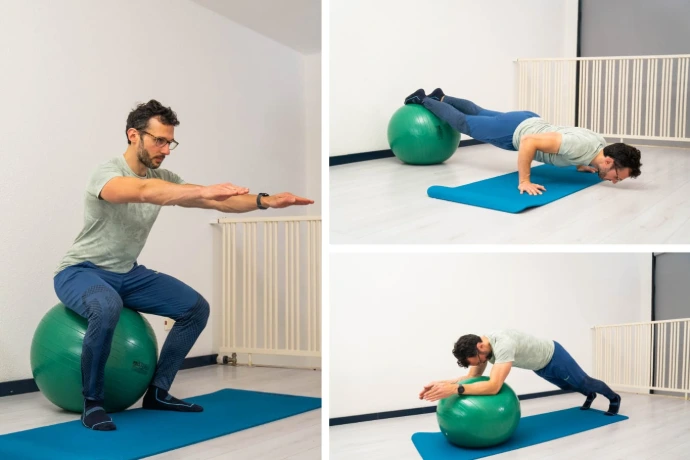
Stability Ball
Straight-Leg Ball Pull-In

Purpose:

strengthen the core and hip flexors while maintaining pelvic stability.

Starting Position:

  • Hold a plank position with the feet on the ball.

  • Hands on the ground and arms in shoulder with, core engaged.

Execution:

  1. Keep the legs straight and pull the ball toward your torso.

  2. Control the movement as the ball comes closer.

  3. Extend the legs back out without touching the floor.

Common Mistakes:

  • Bending the knees

  • Arching the lower back

  • Using momentum

Coaching Tip:

move slowly and keep the lower back gently pressed into the floor.

Stability Ball
Ball Pass from Hands to Feet

Purpose:

strengthen the core and improve coordination.

Starting Position:

  • Lie on your back holding the ball with your hands.

  • Legs extended.

Execution:

  1. Lift arms and legs simultaneously.

  2. Pass the ball from hands to feet.

  3. Lower arms and legs and repeat.

Common Mistakes:

  • Using momentum

  • Dropping the ball

  • Losing core tension

Coaching Tip:

move slowly and stay controlled.

Stability Ball
Alternating Single-Leg Raises with Stability Ball

Purpose:

activate hip flexors and core/lower back muscles.

Starting Position:

  • Lie on the ball with your stomach and both legs extended.

Execution:

  1. Lift one leg upward.

  2. Lower it with control and switch sides.

Common Mistakes:

  • Fast uncontrolled movement

Coaching Tip:

keep the stomach gently pressed into the ball.

Stability Ball
Forearm Plank on Stability Ball

Purpose:

strengthen core, shoulders, and deep stabilizers.

Starting Position:

  • Forearm on the stability ball.

  • Body in a straight plank position.

Execution:

  1. Hold the plank position steadily.

  2. Keep elbow under shoulders.

  3. Breathe calmly.

Common Mistakes:

  • Sagging hips

  • Ball rolling

  • Holding breath

Coaching Tip:

squeeze glutes and brace the core.